
1. Which translation of the Bible do you use?
We use the English Standard Version (ESV). When God originally gave his word to humanity, he used the common language of their day. Consequently, we believe that a translation of the Bible for our culture should use common, modern English. This makes the Bible easily understandable—a matter of vital importance since God intended for us to read his word and have our lives changed by it. The ESV is an accurate version. The translators did not sacrifice faithfulness to the content of God’s message in the original languages for the sake of clarity in English. Its balance of accuracy and clarity is superb. For a summary of its value, see Why Our Church Switched to the ESV, by Kevin DeYoung.
2. What worship style do you use?
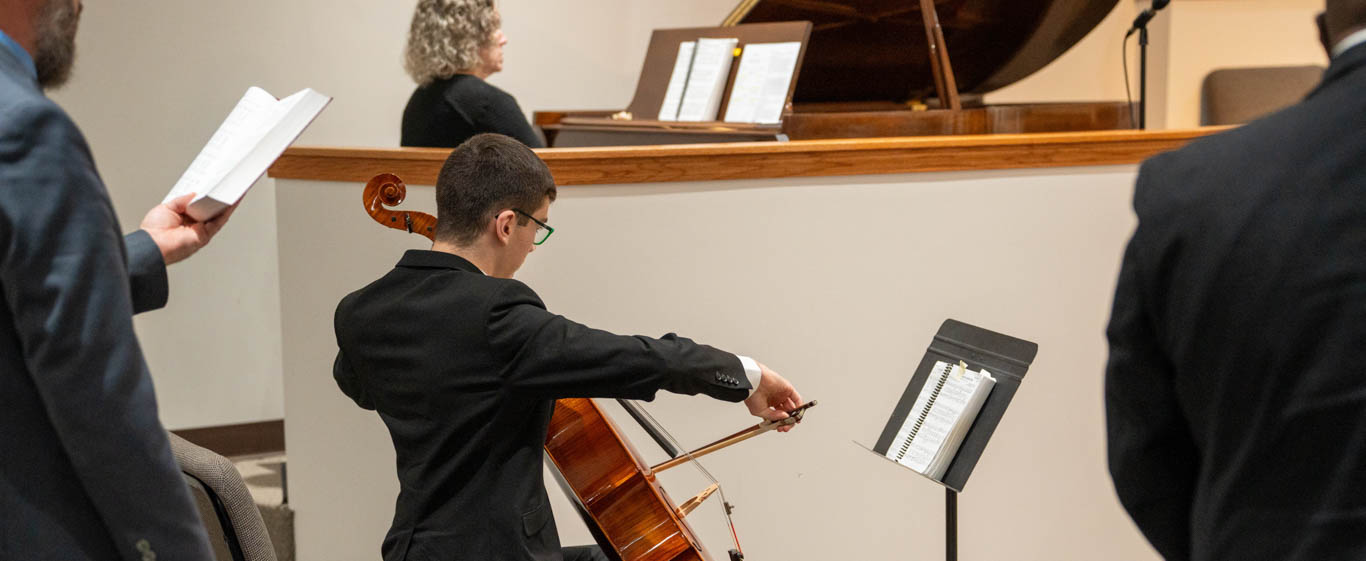
We shape our worship services according to the “regulative principle of worship.” This means that our worship services contain only elements prescribed by Scripture. This precludes many of the novel ideas that have crept into churches in recent years. Furthermore, we use a traditional musical style, whether the songs are historical or recent compositions. We do this for two reasons. First, it helps us maintain our connection with previous generations of believers. Second, “contemporary” services characteristically employ worldly, man-centered styles that are inconsistent with the worship of our holy God. We believe that singing Christ-honoring sacred music–far from being dull and lifeless–is an engaging, purposeful, and profoundly meaningful exercise.
3. Does your church speak in tongues or practice other miraculous gifts of the Holy Spirit?
We believe that the miraculous gifts of the Holy Spirit, including the gift of tongues, were given at the beginning of the church age (Acts 2). They were inseparably connected with the ministry of the apostles (Eph 2:20; the book of Acts). These gifts were given as a “sign,” validating and further explaining the new message of salvation for all people through Jesus Christ (1 Cor 14:22). After the completion of the New Testament Scriptures, these gifts were no longer necessary, and they therefore “ceased” (1 Cor 13:8-12). Therefore, we do not pursue the exercise of these “miraculous” gifts.
4. How should I dress for the services?
You are welcome in our services regardless of how you dress. We do encourage those who attend our worship services to dress in a way that reflects a respectful attitude toward God, who is the focus of our worship.
5. Do you provide childcare?
For all of our weekly public gatherings, we provide nursery accommodations. This includes newborns through three-year-olds. The ladies who serve in this ministry show loving care to the children and ensure the facilities are clean and safe.
6. What does it mean to be a Baptist?
Historically, the name “Baptist” referred to churches that affirm specific biblical doctrines. Among them are:
- New Testament authority.
- Believer’s baptism
- Pure church membership
- Individual Christian responsibility
- Congregational government
- Separation of Church and State
HBC is a Baptist church because we believe each of these teachings reflects biblical truth and is, therefore, very important.
7. Does your church belong to an association of churches?
Huron Baptist Church is an independent congregation. We believe that each local church should be autonomous (self-governing) and free from any outside coercion or rule. We do cooperate with other churches of like faith and practice for fellowship and mutual ministry endeavors that help fulfill the biblical mission.
8. What kind of preaching can I expect to hear at HBC?
You will hear expository messages. This means that the speaker bases his sermon on a passage of Scripture and allows it to determine the main idea and structure of the message. Our pastor also frequently teaches through complete books or large sections of the Bible, proceeding paragraph by paragraph. We believe that this approach is the best possible form of preaching because it enables the pastor to proclaim the truth of the Bible clearly and accurately. It also “feeds” the audience with a better understanding of God’s Word rather than giving them a diet of man-made ideas.